
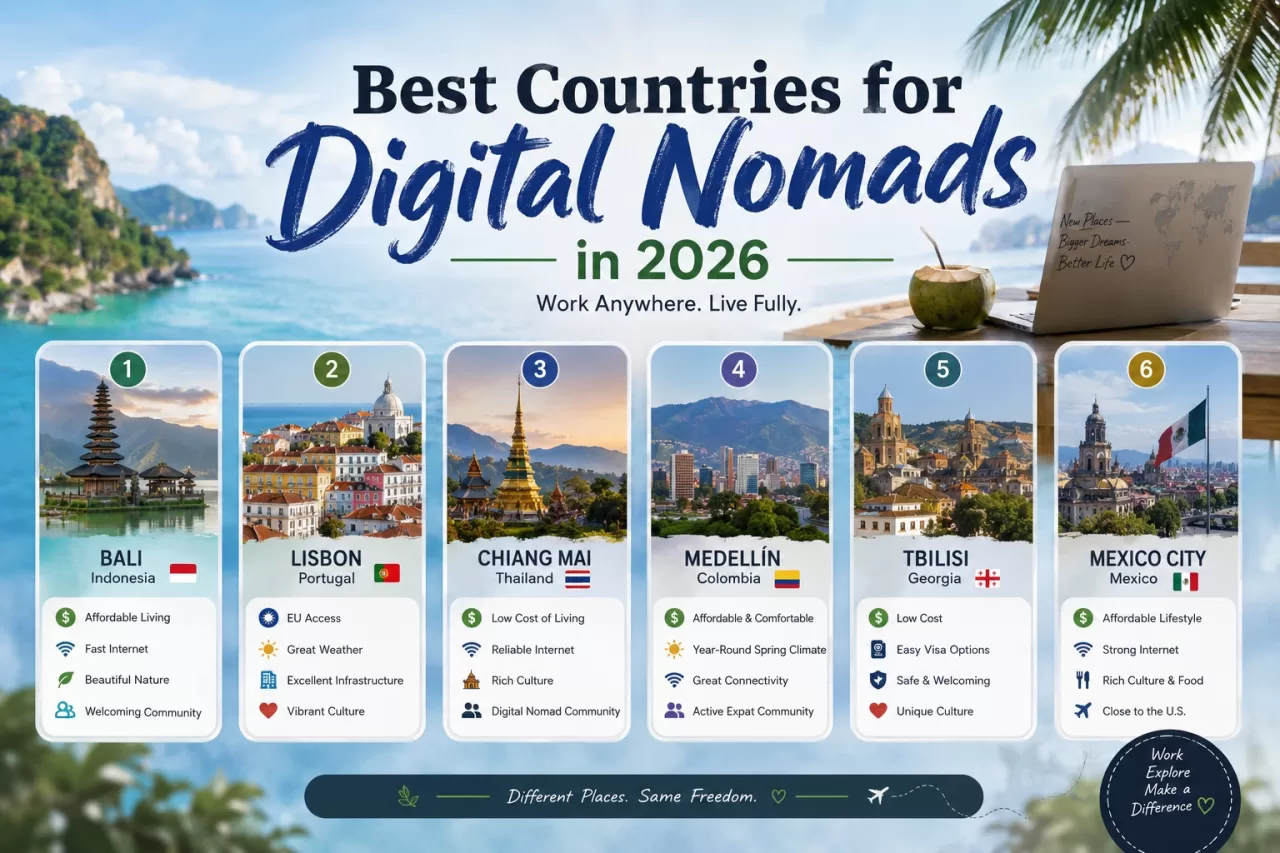
The number of countries offering a dedicated digital nomad visa has grown substantially over the past few years, and the details vary enormously — income thresholds range from effectively nothing to well over $7,000 a month, and visa lengths run anywhere from six months to five years. Picking a destination means weighing visa accessibility against cost of living, internet reliability, tax treatment, and how established the local remote-work community already is.
▤ Contents⌃
Below is a practical rundown of the countries currently offering the strongest overall package for remote workers, based on their current visa terms as of 2026.
Quick Comparison
| Country | Visa Name | Approx. Monthly Income Requirement | Visa Length |
|---|---|---|---|
| Portugal | D8 Digital Nomad Visa | ~€3,680 | 1 year, renewable up to 5 |
| Spain | Digital Nomad Visa (Startup Act) | ~€2,800 | 1-3 years, renewable |
| Estonia | Digital Nomad Visa | ~€3,500 | Up to 1 year |
| Croatia | Digital Nomad Residence Permit | ~€2,500-3,500 | Up to 1 year |
| Thailand | Destination Thailand Visa (DTV) | No fixed monthly minimum; ~500,000 THB in savings/income | 5 years, 180-day stays per entry |
| Georgia | Remotely from Georgia | No minimum income requirement | Up to 1 year |
| Colombia | Digital Nomad Visa | ~$1,000 | Up to 2 years |
| Costa Rica | Rentista/Digital Nomad Visa | ~$3,000 | 1-2 years |
| Malaysia | DE Rantau Nomad Pass | ~$2,000-2,500 | Up to 1 year, renewable |
| UAE (Dubai) | Virtual Working Programme | ~$3,500-5,000 | 1 year, renewable |
Income requirements shift as minimum wages and cost-of-living indexes are updated each year, so it's worth confirming the current figure directly with the relevant consulate or official visa portal before applying. A broader walkthrough of how these visa categories work in general is available in best digital nomad visas around the world.
Portugal
Portugal's D8 visa remains one of the most established digital nomad pathways in Europe, requiring an income of roughly four times the national minimum wage — currently around €3,680 a month for a single applicant. It offers a genuine route to long-term residency and eventually citizenship, which sets it apart from destinations that only offer a temporary stay. Lisbon and Porto have become considerably less budget-friendly than they were a few years ago, but the country's overall cost of living, healthcare system, and established remote-work infrastructure still make it a strong long-term base.
Spain
Spain's digital nomad visa, introduced under the Startup Act, requires an income around €2,800 a month for the primary applicant — currently one of the more accessible thresholds among Western European options. It also comes with access to a reduced flat tax rate for qualifying applicants during the first several years of residency. Spain's visa office has tightened document review in 2026, so accurate paperwork matters more than it did in the visa's early years, but the underlying requirements haven't become significantly harder to meet.
Estonia
Estonia was among the first countries to formalize a digital nomad visa category, and its government digital infrastructure remains a genuine advantage for anyone dealing with visa paperwork, banking, or business registration remotely. It's not the cheapest option on this list, but it's a reliable, well-organized base, particularly for tech workers already comfortable with digital-first bureaucracy.
Croatia
Croatia's digital nomad residence permit offers Adriatic coastal living with a lower cost of living than most Western European alternatives, and the income threshold sits in a comparatively accessible range. It's better suited to a defined stay of up to a year than a long-term relocation plan, since the permit doesn't currently offer an extended path to residency the way Portugal's does.
Thailand
Thailand's Destination Thailand Visa (DTV) takes a different approach than most of the European options — rather than requiring a fixed monthly income, it asks for proof of savings or income (roughly 500,000 Thai baht, or around $15,000) over a recent period, and the visa itself runs for five years with multiple entries. Cost of living remains considerably lower than in Europe, with Chiang Mai in particular known as one of the more affordable, well-established digital nomad hubs globally. Staying 180 days or more in a calendar year does trigger Thai tax residency, which is worth planning around rather than discovering after the fact — more detail on how this and other countries handle tax residency is in digital nomad taxes: what you need to know.
Georgia
Georgia's "Remotely from Georgia" program remains one of the most accessible options available, with no minimum income requirement and a fully online application process. It's a strong choice for anyone testing the digital nomad lifestyle for the first time without wanting to commit to a higher-cost destination or a lengthy application process. Internet infrastructure and coworking availability are solid in Tbilisi specifically, though they thin out considerably outside the capital.
Colombia
Colombia's digital nomad visa sits at the lower end of Latin America's income requirements, at roughly $1,000 a month, and offers up to two years of stay. Medellín has built a genuine reputation as a digital nomad hub over the past several years, with a lower cost of living than most comparable destinations and an active expat and remote-work community.
Costa Rica
Costa Rica's visa pathway comes with tax advantages on foreign-earned income and a stable, well-regarded quality of life, though day-to-day costs run higher than most of its Central American neighbors. It's a common choice for people prioritizing nature, safety, and long-term livability over the absolute lowest possible cost of living.
Malaysia
Malaysia's DE Rantau Nomad Pass targets a growing tech and remote-work scene, with Kuala Lumpur offering solid infrastructure at a lower cost than most other major Asian hubs. The income requirement sits in a moderate range, and the pass is renewable, making it workable for a multi-year stay rather than a single short visit.
UAE (Dubai)
Dubai's Virtual Working Programme sits at the higher end of both income requirements and cost of living on this list, but it offers zero personal income tax and access to world-class infrastructure, making it a common choice for higher-earning freelancers, consultants, and remote employees who prioritize business connectivity over affordability.
What Actually Matters Beyond the Visa
The visa is only one piece of the decision. A few other factors tend to matter just as much once someone is actually living somewhere long-term:
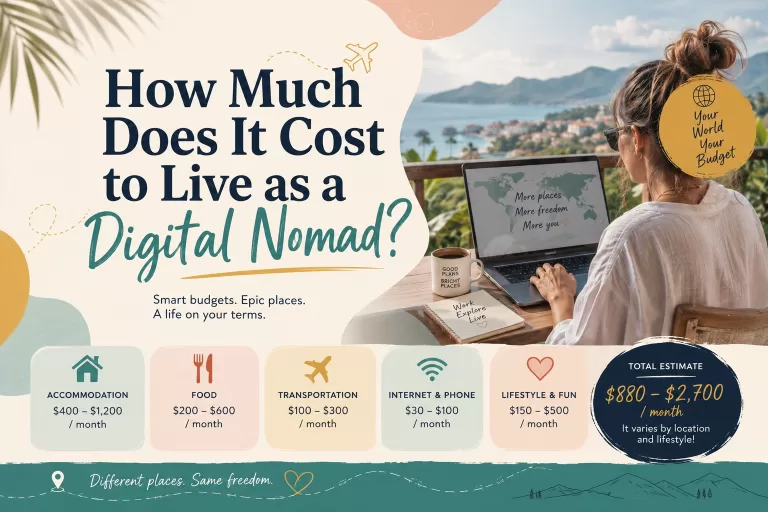
- Total cost of living, including rent, which varies enormously even within a single country depending on the city. A full regional breakdown is in how much does it cost to live as a digital nomad.
- Coworking and internet infrastructure, which affects daily work quality more than almost anything else. Options worth checking out by destination are covered in best coworking spaces for remote workers abroad.
- Health insurance and access to care, since standard travel insurance rarely covers extended stays properly. What to look for is in digital nomad health insurance: what you need to know.
- Community, particularly for anyone new to remote work travel — an established nomad community makes the first few months considerably easier. Where to find these is covered in digital nomad communities: where to find them.
For anyone still working through the earlier steps of this transition — income, savings, gear, and general preparation — the full process is laid out in how to become a digital nomad: a step-by-step guide.
Choosing Based on Budget vs. Long-Term Goals
Georgia, Colombia, and Thailand tend to suit people prioritizing low cost and minimal visa friction, particularly for a first stint abroad. Portugal and Spain suit people looking for a genuine long-term European base with a path toward permanent residency. Costa Rica and the UAE suit people prioritizing lifestyle or tax efficiency over the lowest possible monthly spend. None of these is objectively "best" — the right choice depends on whether the goal is a low-cost trial run, a multi-year relocation, or a long-term tax and lifestyle strategy.
For a narrower, budget-first list rather than this broader comparison, best cities for digital nomads on a budget ranks specific cities rather than whole countries.
Frequently Asked Questions
Which country has the easiest digital nomad visa to get?
Georgia is generally considered one of the most accessible, with no minimum income requirement and a fully online application. Colombia's threshold is also comparatively low among countries with a dedicated visa category.
Do digital nomad visa income requirements change often?
Yes, many are tied to a country's minimum wage or a similar economic index, which gets updated annually. Figures should always be confirmed against the current official requirement before applying, rather than relying on a figure from a prior year.
Is it better to choose a country with no income tax on foreign earnings?
It depends on the full picture, not just the tax rate. A country with zero foreign-income tax but a high cost of living, like the UAE, may not actually leave more disposable income than a country with modest tax exposure but a much lower cost of living.
Narrowing the List Down
With more than fifty countries now offering some form of digital nomad visa, the practical filter isn't which country is "best" in the abstract — it's which one matches the specific combination of budget, desired visa length, and lifestyle someone is actually looking for. The countries above represent a strong cross-section of what's currently available, but the right one still comes down to matching visa terms and cost of living against personal priorities rather than picking from a generic ranking.




Comments 0