
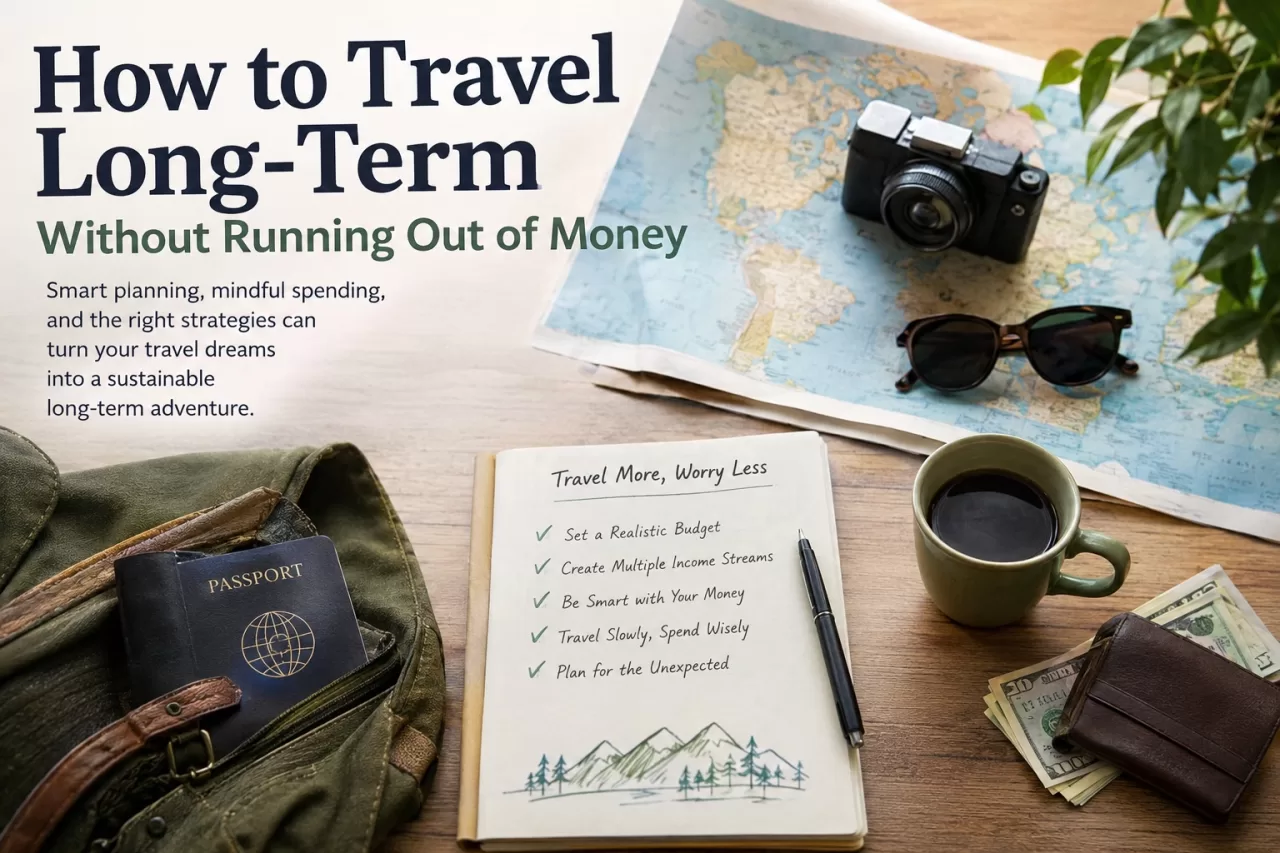
Long-term travel has a fundamentally different financial rhythm than a two-week vacation, and treating it with a vacation mindset is one of the most common reasons people run out of money faster than expected. A trip that lasts months or years needs to be budgeted like an ongoing lifestyle, with sustainable monthly numbers, rather than like an extended splurge that eventually has to end.
▤ Contents⌃
- 1Shift From a Vacation Budget to a Sustainable Monthly Budget
- 2Separate an Emergency Fund From the Travel Budget
- 3Build Income That Can Sustain the Trip, Not Just Start It
- 4Diversify Income Rather Than Relying on One Source
- 5Practice Slow Travel to Reduce Costs
- 6Use Geographic Arbitrage Deliberately
- 7Track Spending Actively, Not Retrospectively
- 8Watch for Common Long-Term Travel Money Leaks
- 9Set Up Banking for International Use Before Leaving
- 10Avoid Lifestyle Inflation as Income Grows
- 11Understand Tax Obligations Before They Compound
- 12Reassess the Budget Periodically, Not Just at the Start
- 13Have a Plan for What Happens If Income Drops
- 14A Simple Framework for Sustainable Long-Term Travel Finances
- 15Frequently Asked Questions
- 16Sustainability Comes From Structure, Not Restriction
Shift From a Vacation Budget to a Sustainable Monthly Budget
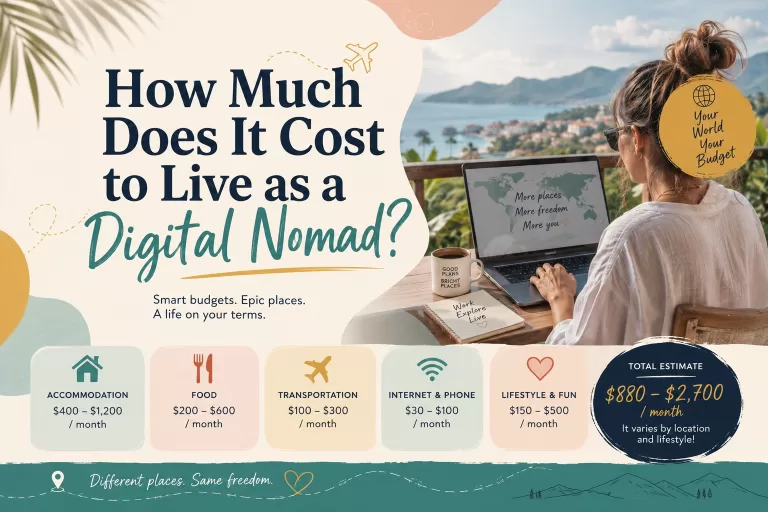
Vacation spending habits — eating out for every meal, booking activities freely, upgrading accommodation without much thought — work fine for two weeks but don't hold up over months or years. The first adjustment that matters most is treating each month of long-term travel like a monthly budget at home: a realistic, repeatable number rather than a one-time indulgence. A full breakdown of what realistic monthly costs look like by region is in how much does it cost to live as a digital nomad.
Separate an Emergency Fund From the Travel Budget
A dedicated emergency fund, kept separate from money allocated for day-to-day travel spending, prevents a single unexpected cost — a medical issue, a canceled flight, a broken laptop — from derailing the entire trip's finances. This fund should be treated as untouchable for regular expenses, reserved specifically for genuine emergencies rather than gradually absorbed into daily spending.
Build Income That Can Sustain the Trip, Not Just Start It
Savings alone are rarely enough to fund travel indefinitely, and relying entirely on a finite amount of savings sets a hard, predictable end date on the trip. A reliable income source — whether remote employment, freelance work, or a business — is what actually allows travel to continue without a countdown clock running in the background. How to build and find this kind of income is covered in how to find remote work while traveling.
Diversify Income Rather Than Relying on One Source
A single client, employer, or income stream creates fragility that's amplified during long-term travel, since resolving a lost income source is harder without a stable home base to fall back on temporarily. Spreading income across multiple clients or income types provides a buffer if any single source slows down or disappears unexpectedly.
Practice Slow Travel to Reduce Costs
Moving between destinations frequently multiplies costs in ways that aren't always obvious upfront — repeated flights, short-term accommodation premiums, and the setup costs (local SIM cards, initial deposits, learning a new area) that come with every move. Staying longer in fewer places consistently reduces overall spending compared to a fast-paced, constantly-moving itinerary, while also reducing the logistical and mental load that contributes to burnout. More on how pacing affects sustainability overall is covered in how to avoid burnout while working and traveling.
Use Geographic Arbitrage Deliberately
Earning in a stronger currency while spending in a country with a lower cost of living is one of the most effective ways to extend a long-term travel budget significantly. This doesn't require choosing only the cheapest possible destinations — it means being intentional about balancing higher-cost stretches (a few months in Western Europe, for instance) with lower-cost stretches elsewhere, rather than spending at a consistently high rate throughout the entire trip. A ranked list of currently affordable bases for this kind of balancing is in best cities for digital nomads on a budget.
Track Spending Actively, Not Retrospectively
Long-term travelers who track spending in real time, even with a simple spreadsheet or budgeting app, catch overspending patterns weeks or months before someone relying on periodic bank statement reviews would notice. This doesn't need to be complicated — a simple weekly check-in against a planned monthly number is usually enough to catch drift before it becomes a real problem.
Watch for Common Long-Term Travel Money Leaks
| Money Leak | Why It Adds Up |
|---|---|
| Frequent flights between destinations | Each move carries a cost that a slower travel pace avoids entirely |
| Visa runs and border crossings for tourist visa renewals | Repeated flights or travel purely for visa purposes, rather than genuine travel |
| Subscriptions and software carried over from a previous routine | Easy to forget, but a real recurring cost that adds up over months |
| Lifestyle inflation as income grows | Upgrading accommodation and spending habits without a corresponding increase in savings or income stability |
| Currency conversion and international transaction fees | Small percentage losses that compound significantly over a long trip |
Set Up Banking for International Use Before Leaving
A bank account or card with no foreign transaction fees and reimbursed ATM fees prevents a steady, quiet loss of money to fees that add up considerably over a long-term trip. Setting this up before departure, rather than discovering the cost of a poorly suited card mid-trip, avoids an avoidable and ongoing expense.
Avoid Lifestyle Inflation as Income Grows
As freelance or remote income increases over time, it's tempting to proportionally increase spending — nicer accommodation, more frequent travel, higher-end coworking memberships. Some of this is a reasonable and enjoyable use of increased income, but maintaining at least some gap between income and spending, rather than letting the two rise together indefinitely, is what actually builds long-term financial resilience for this lifestyle rather than just a higher-cost version of the same month-to-month existence.
Understand Tax Obligations Before They Compound
Tax residency rules don't pause just because someone is traveling long-term, and unresolved tax obligations can turn into a significant, unexpected cost later if left unaddressed. Understanding this early, rather than assuming travel exempts someone from home-country or destination-country tax obligations, avoids a costly surprise well into the trip. A general overview of how this typically works is in digital nomad taxes: what you need to know.
Reassess the Budget Periodically, Not Just at the Start
A budget set before leaving rarely stays perfectly accurate for months or years of ongoing travel. Reviewing actual spending against the original plan every few months, and adjusting for changes in income, destination costs, or lifestyle, keeps the budget realistic rather than relying on an outdated estimate from early in the trip.
Have a Plan for What Happens If Income Drops
Freelance and remote income fluctuates, and having a rough plan for a slower income month — which expenses to cut first, how much of the emergency fund is appropriate to use, whether to temporarily relocate somewhere cheaper — reduces panic and poor financial decisions if and when it actually happens. This kind of contingency planning is worth doing before it's needed, not during an actual income dip.
A Simple Framework for Sustainable Long-Term Travel Finances
| Component | Purpose |
|---|---|
| Reliable income source | Funds ongoing travel without a fixed end date |
| Separate emergency fund | Absorbs unexpected costs without disrupting regular spending |
| Realistic monthly budget | Prevents vacation-style overspending from compounding over months |
| Active spending tracking | Catches overspending early, before it becomes a larger problem |
| Periodic budget review | Keeps the plan aligned with actual costs and income over time |
This framework fits naturally into the broader transition process for anyone moving from a traditional job into this lifestyle, covered in more detail in how to transition from a 9-to-5 job to full-time travel and how to become a digital nomad: a step-by-step guide.
Frequently Asked Questions
How much should be saved before starting long-term travel?
Beyond a dedicated emergency fund, savings alone shouldn't be the primary funding source for indefinite travel. A reliable income stream matters more for sustainability than a large upfront savings balance, though a runway of several months is still worth having as a buffer.
Is slow travel actually cheaper, or does it just feel that way?
It's genuinely cheaper in most cases, since it avoids the repeated flight costs, short-term accommodation premiums, and setup costs that come with frequent relocation, not just a subjective feeling of stability.
What's the most common reason long-term travelers run out of money?
Treating an extended trip with a short-term vacation mindset — spending at a rate that only makes sense for a couple of weeks — rather than adjusting to a sustainable, repeatable monthly budget appropriate for months or years of travel.
Sustainability Comes From Structure, Not Restriction
Traveling long-term without running out of money isn't really about spending as little as possible — it's about building a financial structure (reliable income, a real emergency fund, a repeatable monthly budget) that can support the lifestyle indefinitely rather than for a fixed, dwindling period. The travelers who sustain this for years, rather than months, are almost always the ones who treated it as an ongoing financial system rather than an extended vacation from one.



Comments 0