
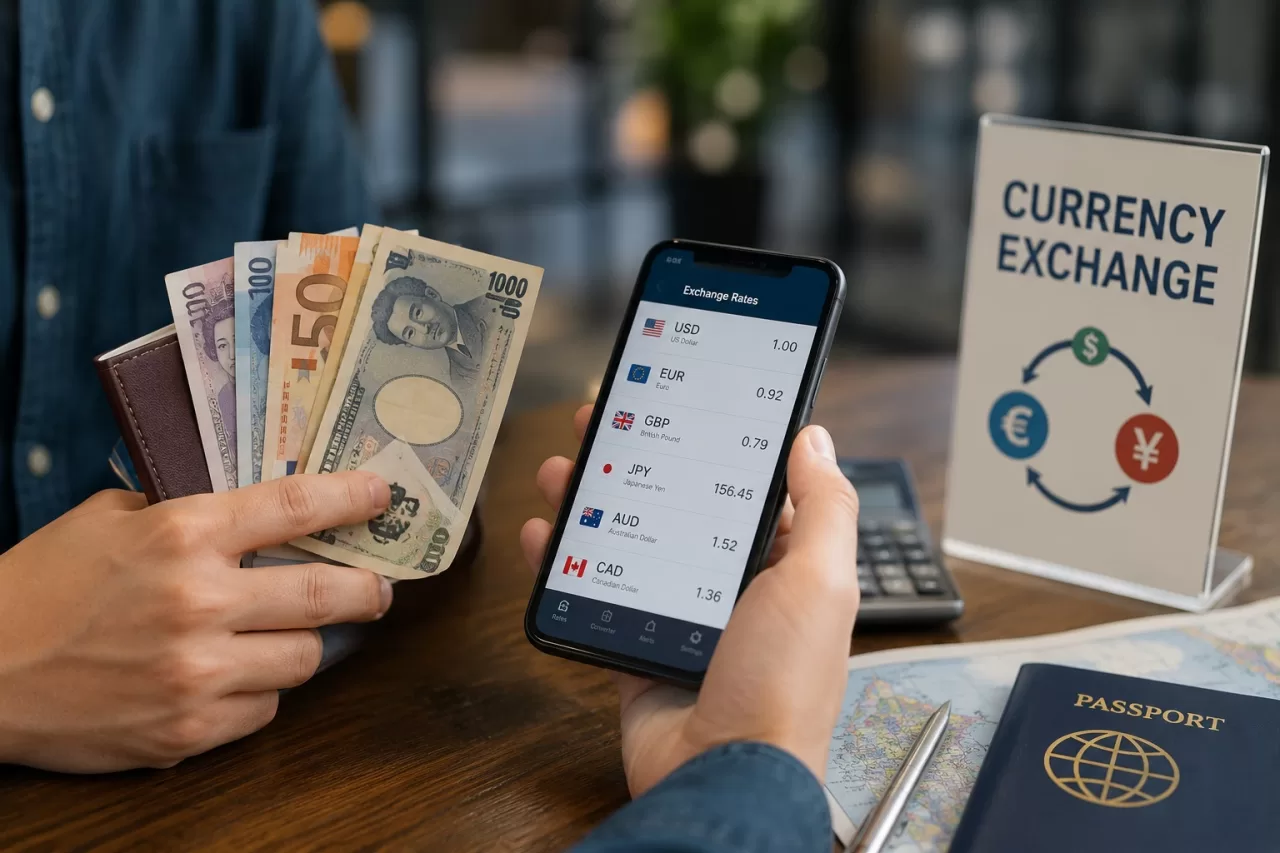
Currency exchange is one of the easiest places to quietly lose money on a trip, mostly because the worst options — airport counters, hotel front desks, dynamic currency conversion at checkout — are also the most convenient and the most commonly used by travelers who don't know better. The actual rate difference between a good option and a bad one is often 5-10%, which adds up fast over the course of a trip.
▤ Contents⌃
- 1Understand the Two Numbers That Matter
- 2Avoid Airport Currency Exchange Counters
- 3Use ATMs With a Fee-Free Travel Card
- 4Decline Dynamic Currency Conversion
- 5Notify the Bank Before Traveling
- 6Carry a Backup Payment Method
- 7Exchange Small Amounts, Not Large Ones, When Using Cash Exchange Services
- 8Check for Reputable City Exchange Offices
- 9Use a Travel Credit Card for Purchases
- 10Watch Out for Common Currency Scams
- 11Setting This Up Before You Leave
- 12Frequently Asked Questions
- 13Where the Real Savings Come From
Understand the Two Numbers That Matter
Every currency exchange involves an exchange rate and a fee, and providers often hide one inside the other. A place offering "no fees" but a noticeably worse exchange rate than the market rate is still charging a fee — it's just built into the number rather than listed separately. Checking the current market rate (via a quick search or a currency conversion app) before exchanging anything makes it possible to spot this immediately.
Avoid Airport Currency Exchange Counters
Airport exchange counters consistently offer some of the worst rates available, capitalizing on travelers who need cash immediately and haven't planned ahead. If cash is genuinely needed right after landing, exchanging a small amount to cover transport and initial expenses is reasonable, but the bulk of currency needs are better handled elsewhere.
Use ATMs With a Fee-Free Travel Card
Withdrawing cash from a local ATM using a card designed for international use — one without foreign transaction fees and with reimbursed ATM fees — is one of the most reliable ways to get a fair exchange rate. Several banks and fintech companies now offer cards specifically built for this, including options like Wise, Revolut, and a number of no-foreign-fee debit and credit cards issued by traditional banks. Setting one of these up before departure, rather than relying on a standard home debit card, avoids both a poor exchange rate and stacked fees.
| Method | Typical Cost | Convenience |
|---|---|---|
| Airport exchange counter | High (5-10%+ below market rate) | Very high, but poor value |
| Hotel front desk exchange | High, similar to airport counters | High, poor value |
| Local ATM with fee-free travel card | Low (often near market rate) | Good, requires setup before departure |
| City exchange office (reputable) | Low to moderate | Moderate, requires locating one |
| Dynamic currency conversion at checkout | High, often hidden in the offered rate | Convenient but consistently poor value |
Decline Dynamic Currency Conversion
When paying by card abroad, some card machines and online checkouts offer to charge in the home currency instead of the local one, usually framed as a convenience ("pay in dollars instead of euros"). This is called dynamic currency conversion, and it almost always applies a worse exchange rate than simply letting the transaction process in the local currency and letting the card's own network handle the conversion. Choosing to pay in the local currency, even when prompted otherwise, consistently works out cheaper.
Notify the Bank Before Traveling
Letting a bank or card issuer know travel dates and destinations in advance reduces the chance of a card being flagged or frozen for suspicious activity abroad, which can otherwise leave a traveler without access to funds at an inconvenient moment. Many banks now handle this through an app rather than requiring a phone call, which takes only a few minutes to set up before departure.
Carry a Backup Payment Method
Relying on a single card for an entire trip creates risk if it's lost, stolen, or simply doesn't work at a particular ATM or merchant. Carrying a second card from a different bank or network, along with a small amount of backup cash in a separate location from the main wallet, avoids being stranded if one payment method fails. What else is worth keeping organized and accessible while traveling is covered in essential travel documents you should never forget.
Exchange Small Amounts, Not Large Ones, When Using Cash Exchange Services
Exchanging a large sum of cash all at once, particularly at a mediocre rate, magnifies the loss compared to exchanging smaller amounts as needed. If a cash exchange service is genuinely the only option available, doing it in smaller increments — enough to cover a few days — reduces exposure to a single bad rate and leaves flexibility if a better option turns up later in the trip.
Check for Reputable City Exchange Offices
Outside of airports and hotels, many cities have licensed currency exchange offices offering considerably better rates, particularly in areas with heavy tourist traffic where competition between providers exists. Comparing rates at two or three nearby offices before committing, and avoiding ones offering rates that seem unusually favorable (a common setup for hidden fees or shortchanging), both help avoid a bad exchange.
Use a Travel Credit Card for Purchases
For actual purchases (rather than cash withdrawals), a credit card with no foreign transaction fees typically offers a better rate than exchanging cash in advance, along with added purchase protections most cash transactions don't include. Many of these cards also come with additional travel benefits worth factoring into the choice of which card to bring. A full comparison of travel-friendly credit cards, including which ones handle foreign transactions well, is in best travel credit cards for points and rewards.
Watch Out for Common Currency Scams
A few scams show up repeatedly around currency exchange in heavily touristed areas — being handed the wrong denomination in change, having a bill switched during a transaction, or being quoted a rate that sounds fair but is calculated incorrectly in the vendor's favor. Counting change carefully before walking away from any cash transaction, and knowing roughly what a fair exchange rate looks like before arriving, are the simplest defenses against this.
Setting This Up Before You Leave
Most of the actual savings here come from decisions made before departure rather than choices made in the moment at a currency counter. A short pre-trip checklist:
- Order or activate a fee-free travel card at least a week before departure
- Notify the bank of travel dates
- Check the current market exchange rate so any offered rate can be compared against it
- Bring a small amount of local currency or plan to withdraw a small amount immediately on arrival for initial expenses
This kind of preparation fits naturally into the broader pre-trip planning process, covered in more detail in how to plan a trip step by step: a complete guide.
Frequently Asked Questions
Is it better to exchange currency before the trip or after arriving?
Generally after arriving, using a local ATM with a fee-free card, since home-country exchange services (banks, currency counters) often apply worse rates than what's available at the destination. A small amount exchanged before departure for immediate needs on arrival is a reasonable exception.
Should I always decline dynamic currency conversion?
In almost all cases, yes. Paying in the local currency and letting the card network handle the conversion consistently results in a better rate than the "convenience" of paying in home currency.
Are currency exchange apps accurate for checking rates?
Most mainstream currency conversion apps pull from real-time market data and are accurate enough for comparison purposes, even if the exact rate offered by a specific provider will include a small margin on top.
Where the Real Savings Come From
Currency exchange losses rarely come from one dramatic mistake — they build up from small, repeated decisions: an airport exchange here, a dynamic conversion prompt accepted there, a card with hidden foreign fees used the entire trip. Setting up the right tools before departure and knowing which prompts to decline in the moment removes almost all of this loss without requiring any extra effort once the trip is underway.




Comments 0